Starting a balloon decorating business is exciting. You’ve spent time learning the basics, practicing balloon garlands and building your confidence. As you were practicing, you were likely wondering:
Could Someone Actually Pay Me to Do This?
For many beginners, this is where the excitement is replaced by uncertainty. Making the balloons isn’t the scary part anymore. Running the business is. Starting any business is incredibly scary. You’re putting yourself out there.
Am I good enough?
Where do I find my first clients?
Should I decorate for friends and family first?
How much should I charge?
What if I charge too much?
What if I don’t charge enough?
If you’ve been asking yourself those questions, you’re not alone. Almost every balloon decorator has wondered the same things before accepting their first event. Happily you don’t need years of experience before you can start. You also don’t need a perfect portfolio or hundreds of social media followers.
What you DO need is a plan.
I’m going to talk about the practical ways you can find your first clients both paid and unpaid. Sometimes we have to get the experience of an actual event. Have to crawl before you can walk. (Though, if you have kids, you know some of those littles went straight from crawling to running!)
In this guide, we’ll walk through practical ways to find your first clients, decide when you’re ready to start charging and create prices that make sense for your business. We’ll also cover some common mistakes that beginners make. I want to help you avoid those.
Taking your first paying client can feel like a big step, but once you understand the process, it can make the process less scary.
Start Close to Home
Many people imagine their first paying client will be someone who finds them on social media or through a Google search.
I mean, that does happen, but it’s usually not where most people begin their business journey.
Your first clients are often people you already know. You’re not forcing balloon garlands on unsuspecting dinner guests. These are people who already know you and would genuinely love to see something you created.
Think about the people and organizations around you. Friends and family may have birthdays, baby showers or graduation parties coming up. Coworkers might be planning retirement parties. Churches, schools, community organizations, local nonprofits and youth sports teams all host events throughout the year that often need decor.
These opportunities are valuable because they’re usually lower-pressure than working with a complete stranger. The people hiring you already know you, and they’re often excited to support your new business. That gives you the chance to practice your skills while learning what it’s really like to work with clients.
You’ll gain experience communicating with customers, planning designs, transporting your supplies and setting up at an event. You’ll also discover things that are hard to learn from YouTube videos, like how much extra time to allow for setup, what supplies are easy to forget and how to solve small problems when they come up.
Every event teaches you something new. Those lessons build confidence, and confidence is one of the most valuable things you can have when you’re starting any business.

Treat every practice event like it’s a paying job even if you’re decorating for a friend or family member.
Arrive on time. Communicate clearly before the event. Take plenty of photos when you’re finished and ask for honest feedback afterward.
Those simple habits help you build a professional reputation from the very beginning.
Free vs. Discounted Work
One of the biggest questions new balloon decorators ask is whether they should work for free. The answer isn’t simply yes or no.
There are times when offering your services at no charge makes sense especially if you’re doing it for a specific reason. Aunt Sally tells you about the party she’s throwing and says she needs some help. Your sister is decorating your niece’s birthday party. A local charity is looking for donations. You might even do it with no event on the horizon. Creating a balloon display so you have something beautiful to photograph is also valid.
You’re not just giving away your time. You’re gaining experience, building confidence and creating a portfolio that can help you book paying clients later.
The important thing is that you’re choosing to work for free for a specific reason not because you feel like you have to.
As you become more confident, start thinking about charging for your work. Even if you’re not ready to charge full price, asking clients to cover the cost of materials is a good first step. You might also charge for your materials plus a small labor fee. It helps you recover your expenses while getting comfortable talking about pricing. Those can be uncomfortable conversations for some. *raises hand*
Charging some kind of fee or asking for reimbursement for supplies also changes the way people see your business. When customers pay, even a small amount, they begin viewing your work as a professional service instead of a hobby. Just as importantly, you begin valuing your own time and skills.
Try not to fall into the habit of saying yes to every request for free decorations. It’s generous to do it for friends and family when you want to help someone out or gain experience. But if everyone expects free balloon garlands, it can become difficult to start charging later. Before you know it, you’re the unofficial neighborhood balloon person, and everyone assumes you’ll happily show up with an air pump and a smile.
Remember, you’re building a business. Every event helps you grow, but your goal is to create a business that’s sustainable not one where you’re constantly paying for someone else’s party.
If someone asks whether you’ll decorate for free, it’s perfectly okay to say, “I’m happy to help, but I do need to cover the cost of my supplies.”
That simple response sets a professional expectation while still showing you’re willing to work with them.
Build a Portfolio Before You Need One
One of the easiest mistakes to make is waiting until someone asks to see your work before you start taking pictures.
Don’t wait.
Start building your portfolio with the very first balloon garland you’re proud of. Every project you complete is another opportunity to show future clients what you can create.
You’ll never regret taking too many photos. You’ll absolutely regret realizing three months later that your favorite balloon garland only exists as one blurry picture someone snapped while people were eating cake.
Try taking photos from different angles, too. A balloon garland can look completely different depending on where you’re standing, and giving potential clients multiple views helps them picture your work at their own event.
Lighting makes a bigger difference than most people realize. Whenever possible, take your photos in natural light. If you’re indoors, open curtains or position yourself near a window. You’ll usually get much better results than using a camera flash.
It’s also worth taking a minute to look at the background before you snap a picture. Moving a chair, a trash can or a stack of boxes out of the frame can make your work look much more polished. You don’t need expensive photography equipment or complicated editing. A clean background and a few simple adjustments to brightness are often all you need.
As your skills improve, don’t be afraid to retire older photos. Your portfolio should grow with you. Replacing early work with your newest designs keeps your portfolio looking fresh and shows the quality clients can expect today.
Once you’ve collected a few strong photos, start sharing them. You don’t need to be everywhere at once. Choose one or two places where your future clients are most likely to find you. That might be Instagram, a Facebook business page or Pinterest. If you decide to build a website later, you’ll already have a collection of images ready to use.
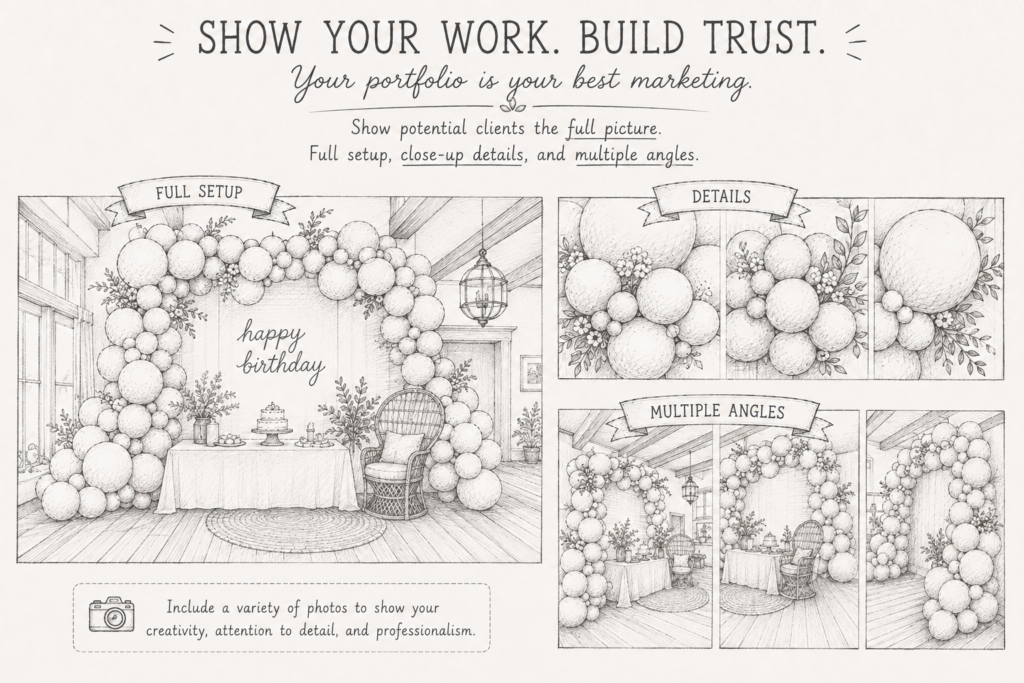
A portfolio isn’t about proving you’ve decorated hundreds of events. It’s about giving people confidence that you can create something beautiful for them.
How Do You Know You’re Ready to Charge?
This is probably one of the hardest questions new balloon decorators ask themselves.
“What if I’m not good enough?”
The truth is, most people don’t wake up one morning suddenly feeling ready. They build confidence one project at a time. Even experienced business owners sometimes wonder if they’re charging enough or if they could have done something better. Instead of asking whether you’re perfect, ask yourself a few different questions.
Can I consistently create the same quality balloon garland?
Do I have a good idea of how long a project will take?
Can I handle small problems without feeling overwhelmed?
Would I feel comfortable creating this same design again for another client?
If you can answer “yes” to most of those questions, you’re probably more ready than you think.
Remember, your clients aren’t expecting perfection. They aren’t comparing your work to someone who’s been decorating professionally for ten years. They’re hiring you because they like your style, your prices and the experience you provide.
That doesn’t mean you should take on every job that comes your way. If someone asks for a massive balloon installation you’ve never attempted before, it’s okay to be honest. You might suggest a simpler design that matches your current skill level or explain that you’re not offering that service yet.
There’s nothing wrong with growing into more advanced work over time.
In fact, that’s exactly how most successful balloon decorators build their businesses. They master one skill, gain confidence, then add another service when they’re ready.
If you’re unsure whether you’re ready to charge, try recreating one of your favorite balloon garlands from start to finish without looking at a tutorial.
If you can confidently plan it, build it and finish it with results you’re proud of, that’s a much better sign than waiting until you feel “ready.” Confidence usually comes after you’ve taken the leap, not before.
How to Calculate Your Prices
Pricing is one of the biggest challenges for new balloon decorators. It can feel like everyone else already knows the secret, while you’re staring at a blank page wondering where to begin.
The first thing to remember is this: don’t build your prices around someone else’s business.
You might see another decorator charging $250 for a balloon garland, but you don’t know what’s included in that price. They may have years of experience, expensive equipment, employees or a long drive to every event. Another decorator might charge less because they’re working part-time or trying to book more clients. Your business is different. Instead of comparing yourself to everyone else, start by understanding what it actually costs you to complete a job.
A simple pricing formula looks like this:
**Materials + Labor + Travel + Business Expenses + Profit = Your Price**
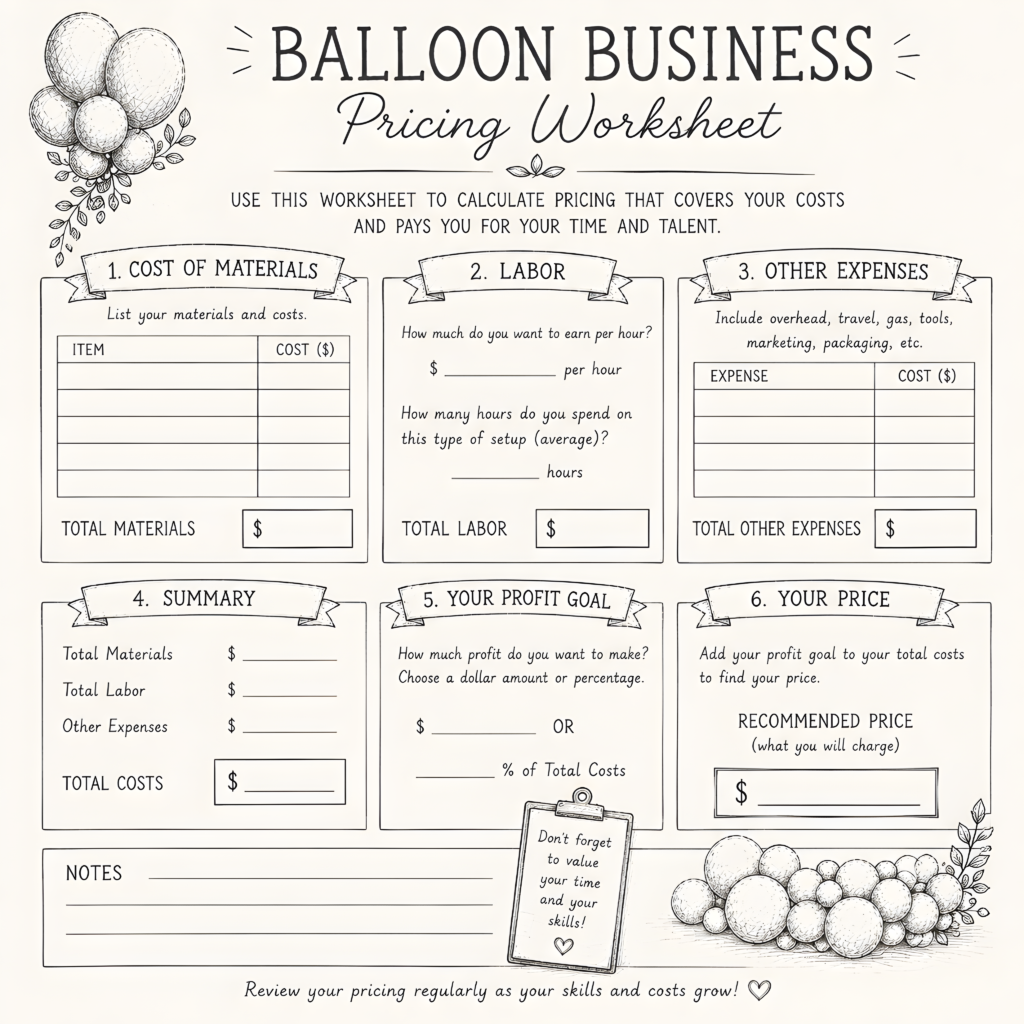
Don’t worry about figuring out exact numbers just yet. Right now, the goal is to understand the pieces that make up your final price.
Materials include everything you use to create the balloon display. Labor is the time you spend shopping, building, driving and setting up. Travel covers getting to and from the event. Business expenses are the costs of running your business, even if they aren’t tied to one specific job. Finally, there’s profit, which is the money your business earns after covering all of its costs.
Many beginners accidentally skip one or more of these pieces. They think about the balloons, but forget the hour they spent shopping. They remember the setup, but not the drive across town. Those little expenses add up quickly.
Once you understand what belongs in your pricing, creating a quote becomes much less intimidating. In the next section, we’ll look at each part of the formula in more detail so you can see exactly what should be included.
What Should You Include in Your Price?
Now that you understand the basic pricing formula, let’s take a closer look at what goes into each part. This is where many beginners accidentally undercharge because they only think about the balloons themselves.
Materials
Your materials are more than just balloons. Every item you use to complete a client’s order should be considered part of the cost of the job.
Depending on the design, your materials might include:
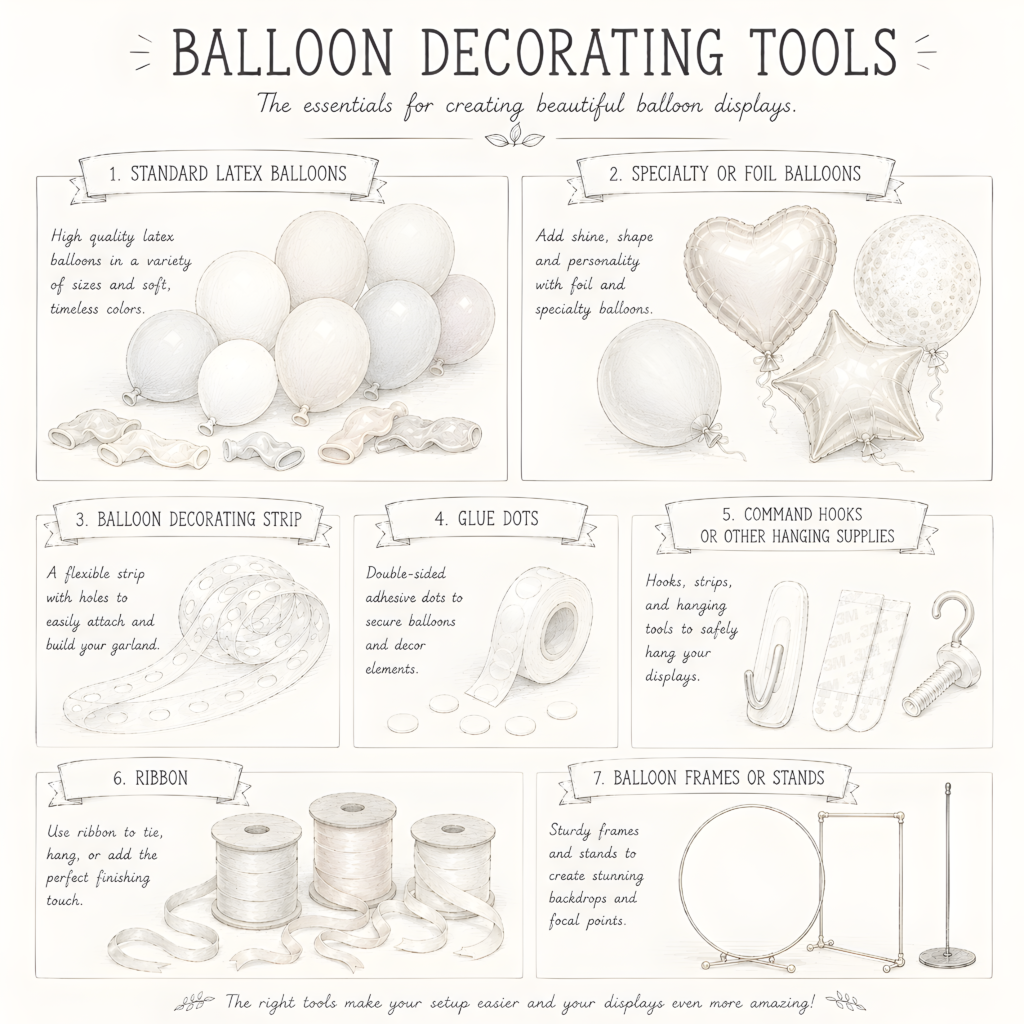
- Standard latex balloons
- Specialty or foil balloons
- Balloon decorating strip
- Glue dots
- Command hooks or other hanging supplies
- Ribbon
- Balloon frames or stands if you’re providing them
It’s easy to overlook small items like glue dots or decorating strips because they’re inexpensive on their own.
Over time, though, replacing those supplies becomes part of the cost of doing business. Including them in your pricing helps ensure you’re not paying for them out of your own pocket.
Labor
Labor isn’t just the time you spend twisting balloons together.
Think about everything you do before, during and after the event.
That includes:
- Shopping for supplies
- Organizing your materials
- Inflating balloons
- Building the garland or display
- Driving to the venue
- Installing the decorations
- Cleaning up afterward if that’s part of your service
Many new decorators only charge for the time they’re physically building the balloons. In reality, your client is paying for your entire service not just the finished display.
Business Expenses
Every business has ongoing expenses that help keep it running.
These may include:
- Gas and vehicle expenses
- Insurance (which we’ll cover in more detail in a later article)
- Marketing and advertising
- A website or online shop
- Replacing equipment as it wears out
- Other business-related supplies and tools
You don’t need to calculate every penny for each job, but it’s important to remember that these costs exist. As your business grows, they’ll become part of your overall pricing strategy.
Profit
Profit is the part many beginners forget.
Some people assume profit is whatever money is left over after they pay for supplies. That’s not the best way to think about it.
Profit should be included intentionally.
It’s what allows you to grow your business, replace equipment, invest in better tools and, most importantly, pay yourself for the work you’ve done.
A business that only covers its expenses isn’t really earning anything. Over time, that makes it difficult to continue growing.
If you’re not paying yourself for your time, you’re paying to decorate someone else’s party.
There’s nothing wrong with keeping your prices lower while you’re gaining experience, but don’t forget that your time has value. As your confidence and skills grow, your pricing should grow with them.
Raising Your Prices
One of the biggest mistakes new business owners make is thinking that the first price they choose has to be the price they charge forever.
It doesn’t.
Your pricing should grow as your business grows. When you’re just getting started, you’re still learning. Each event teaches you something new. You become faster at building balloon garlands, more confident installing them and better at estimating how many supplies you’ll need. As those skills improve, your pricing should reflect the increased value you’re providing.
You’ll also notice that some jobs become much easier with experience. A balloon garland that once took three hours to build may eventually take half that time because you’ve developed better techniques and a smoother workflow. That doesn’t mean you only charge the 90 minutes you spent twisting latex.
Clients aren’t paying only for the hours you spend decorating. They’re also paying for the knowledge and experience that allow you to create beautiful results at a quicker pace.
Another sign it’s time to raise your prices is when your calendar starts filling up. If you’re consistently booking events and turning people away because you’re already scheduled, that’s often a sign your current pricing may be too low for the demand.
You don’t have to make dramatic changes overnight. In fact, small, gradual increases are usually much easier for both you and your clients. Raising your prices a little at a time allows your business to grow naturally without feeling like you’ve made a huge leap.
Remember, raising your prices isn’t about charging more simply because you can. It’s about making sure your business stays healthy as your experience, confidence and the value you provide continue to grow.
Keep a simple notebook or spreadsheet with every job you complete. Write down how long it took, what supplies you used and what you charged.
After a few projects, you’ll start seeing patterns that make pricing future jobs much easier. You’ll also have real information to help you decide when it’s time to adjust your prices.
Common Beginner Pricing Mistakes
Every balloon decorator makes mistakes when they’re starting out. When you realize mistakes are hard to avoid at the start, you’ll actually be more relaxed. That might mean less mistakes. It also means you know they’ll happen and can be on the lookout.
One of the most common mistakes is charging whatever “feels right” instead of calculating your costs. It’s tempting to pick a number that sounds reasonable, but without understanding your expenses, you may end up earning far less than you expected. It can feel like pressure when you haven’t figured out what to charge yet. You throw out a low number, and the person’s face lights up. It’s always best to know your numbers before anyone asks.
Another mistake is copying another decorator’s prices. It might seem like an easy shortcut, but no two businesses are exactly alike. Someone else’s pricing is based on their experience, location, expenses and business goals. Your prices should reflect your business. Your experience level. Your goals.
Travel is another expense that’s easy to overlook. Even driving across town takes time, uses fuel and adds wear and tear to your vehicle. Those costs may not seem significant on one job, but over the course of a year, they can make a noticeable difference.
Many beginners also forget to include setup time. The balloon installation is ready to go. You’ve only done one part of the job. There’s still more that needs to happen. Normally, clients don’t come to pick up the balloons themselves. That leaves a lot to do still:
- Loading your supplies into a vehicle (the bins of supplies, bags of balloons, the frames or backdrops etc)
- Driving to the venue
- Dragging all those supplies into the event space
- Installing the display (which can take time)
- Packing everything up afterward
Your pricing should account for the entire service you provide. It doesn’t stop after you’ve twisted all the balloons.
It’s also smart to plan for mistakes. Balloons pop. Usually at the exact moment you’ve convinced yourself everything is finally finished. Colors don’t always match exactly. Especially in different lighting. Sometimes you’ll need to remake part of a design or replace damaged balloons during setup. Ordering a few extra balloons for every project is a normal part of the business. Pricing should always allow for that.
Perhaps the biggest mistake of all is being afraid to make a profit. Many new business owners worry that charging enough to earn money will scare customers away. In reality, profit is what allows your business to grow, replace equipment, invest in better tools and continue serving future clients.
Finally, remember that not every customer will fit your budget, and that’s okay. If someone is looking for the lowest possible price, they may not be your ideal client. Saying yes to every budget often leads to frustration, burnout and a business that’s difficult to sustain.
Instead of asking, “Will someone pay this price?” try asking, “Can my business survive at this price?”
That small shift in thinking can help you make pricing decisions based on the long-term health of your business instead of the fear of losing a single customer.
Final Thoughts
Every successful balloon decorator had a first client.
They all wondered if they were charging too much or too little. They all questioned whether they were experienced enough. They all made small mistakes along the way and learned something from every event.
You will too.
The goal isn’t to know everything before you begin. The goal is to keep learning with every balloon garland you create and every client you serve. Each event gives you more confidence, strengthens your skills and helps you build a business that reflects the quality of your work.
Don’t wait until you feel like an expert before putting yourself out there. Most people never reach a moment where they suddenly feel “ready.” They become ready by taking that first opportunity, learning from it and applying those lessons to the next one.
Keep practicing. Keep taking photos. Keep improving your process. Most importantly, remember that every experienced balloon decorator was once exactly where you are today.
Your first client isn’t the finish line. It’s only the beginning of your journey.
In the next article, we’ll look at everything that happens before you officially book an event. We’ll cover contracts, deposits, client questionnaires, insurance and the paperwork that helps your balloon business run smoothly from day 1.