One of the biggest misconceptions about starting a balloon business is that you need a fully stocked studio before you can book your first client. Spend a few minutes scrolling through Instagram or TikTok, and you’ll see beautifully organized shelves filled with balloons in every color, rows of specialty tools, and enough backdrop options to fill an event warehouse. It’s easy to look at those businesses and think, “I’ll never be ready until I have all of that.”
We always see the balloon creator with stocked shelves and all the best of everything. The truth is every balloon artist started at the beginning. Most didn’t buy the expensive things at once. They grew their equipment collection one event at a time.
The good news is that you don’t need to make every purchasing decision today. In fact, buying too much too soon is one of the most common mistakes beginners make. Every dollar you spend on equipment is money that can’t be used somewhere else. Imagine you spend a thousand dollars for supplies then have no money for marketing your business. No money for taking a class. Added pressure while you build your client base.
This guide isn’t a giant shopping list of everything you could buy. Instead, we’ll walk through the decisions most new balloon decorators face. We’ll help you decide what’s worth investing in now, what can wait until later and where you can save money. By the end, you’ll have a clearer picture of what you actually need to get started and a plan for growing your equipment as your business grows.
Decision #1: Should I Buy Professional Balloons or Store Brands?
When you’re first getting started, it can be tempting to save money by picking up balloons from a party store or dollar store. After all, a balloon is a balloon…right?
Not exactly.
Professional balloon brands are made to stretch more evenly, hold their color better and pop less often while you’re building an arch or garland. They’re also available in a much wider range of sizes and colors. That gives you more flexibility when you’re creating custom designs.
Store-brand balloons can work for simple decorations at home, but they often vary in size and quality. That can make your job more frustrating especially when you’re still learning.
You really don’t need to buy every professional balloon brand on the market. Start with one or two brands that are well-known in the balloon industry. As you gain experience, you’ll naturally discover which ones you enjoy working with. After you get the professional materials, it’s often a personal preference.
It’s also okay to keep your color collection small at first. Focus on the colors you know you’ll use. White, black, blush, navy, chrome gold and a few popular neutrals can go a long way. When a client requests a specific color, you can order it for that event instead of stocking dozens of shades you’ll rarely use.
It’s better to spend on quality balloons than getting inexpensive ones that pop as soon as you breathe on them. In the end, you’d spend more replacing the popped ones and the ones that don’t inflate evenly.
The good news is that you don’t need to try every professional balloon brand. If you’re just getting started, you’ll probably see Sempertex, Tuftex and Gemar recommended again and again by professional balloon decorators. Since Qualatex left the market, many decorators have made the switch to one of these brands.
If you’re not sure where to start, Sempertex is a solid choice. It has a wide selection of colors and sizes, and it’s one of the brands beginners and experienced decorators recommend most often. Once you’ve completed a few events, try another brand like Tuftex or Gemar to see which one you prefer.
Questions to Ask Yourself
Before placing your first balloon order, ask yourself:
– Will I use these colors again soon?
– Am I buying this because I need it or because it looks pretty on the shelf?
– Could I order this color when a client requests it instead?
Building your inventory slowly isn’t a sign that you’re behind. It’s one of the smartest ways to start a balloon business.
Decision #2: Do I Need an Electric Balloon Pump Right Away?
If you’ve ever tried blowing up dozens of balloons by hand, you already know the answer. (and your lungs will thank you)
Yes. An electric balloon pump is one of the first tools worth buying.
Unlike some purchases that can wait until you’ve booked more clients, an electric pump saves time from day one. Inflating balloons by mouth isn’t practical for balloon decorating and even using a hand pump can get tiring if you’re making large garlands or arches.
In the beginning, don’t go out and buy the most expensive model. You don’t need it. Many beginners start with an affordable dual-nozzle electric balloon pump. It’s enough to handle birthday parties, baby showers and small events without spending hundreds of dollars.
As your business grows, you may decide to upgrade to a commercial-grade inflator. Those machines are built for decorators who inflate hundreds of balloons every week. There’s no need to make that investment when you’re just getting started.
If you’re buying one tool for your balloon business, make it an electric balloon pump. You’ll use it on almost every job, and it’s one of the few purchases that starts saving you time right away.
Ask Yourself
Before buying an electric pump, ask yourself:
– Will this handle the size of events I plan to book?
– Is it portable enough to take to client locations?
– Will I actually use the extra features on a more expensive model?
For most beginners, a simple electric pump is all you need. You can always upgrade later if your business grows.
If you’re shopping for your first electric balloon pump, you’ll quickly notice dozens of nearly identical pumps online. Many beginners start with the IDAODAN Dual Nozzle Electric Balloon Pump (often sold under several different brand names). It’s affordable, easy to use and powerful enough for birthday parties, baby showers and most small events. Once you’re decorating large events every week, you can decide if it’s time to upgrade to a commercial inflator.
Decision #3: Should I Buy Every Balloon Color?
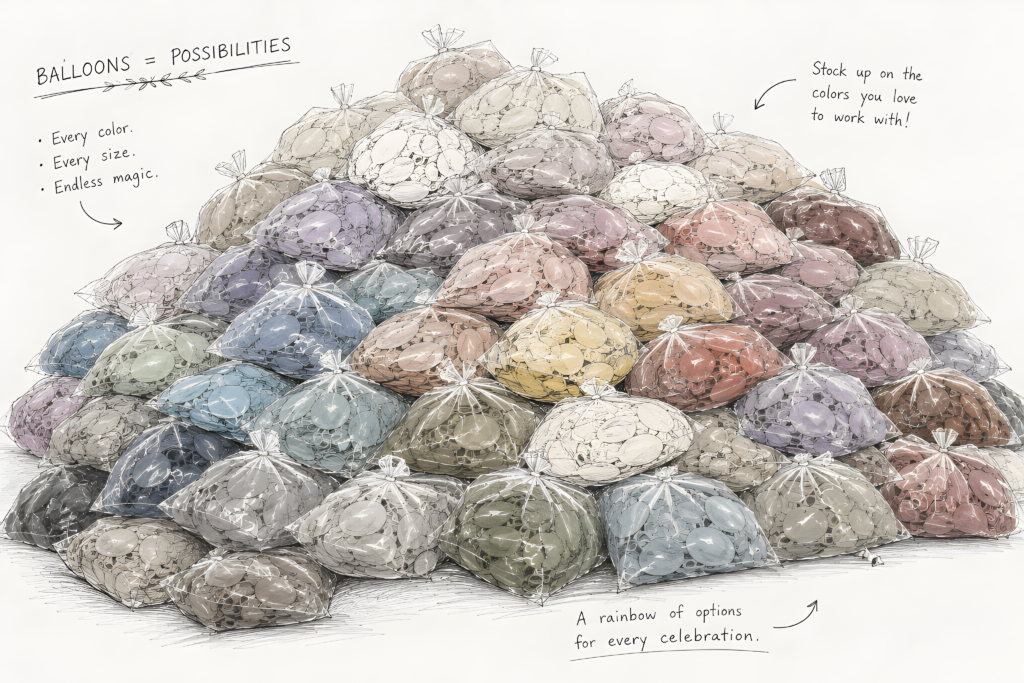
It’s easy to fall in love with balloon colors.
One minute you’re shopping for white and blush balloons. The next minute your cart is filled with eucalyptus, dusty blue, terracotta, mustard, chrome gold and a dozen shades you’ll probably never use.
Try not to fall into that trap.
Balloons take up space, and every color you buy ties up money that could be used somewhere else. If you don’t have a client asking for a specific color, there’s no reason to buy it just because it looks pretty. Instead, build your collection slowly.
Start with colors that work for lots of different events. White, black, blush, navy, chrome gold and a few neutral shades will cover birthdays, baby showers, graduations and many corporate events. As new clients book with you, you can order specialty colors for those events.
Another smart approach is to learn color palettes instead of collecting every color available. Many balloon garlands use just three to five colors. Once you understand how colors work together, you’ll be able to create beautiful designs without owning hundreds of balloons.
Don’t shop by color. Shop by the events you want to book.
If your goal is birthday parties, buy colors that work for birthdays. If you want to decorate baby showers, build a collection around those palettes first. Let your clients guide what you buy next.
Ask Yourself
Before adding another color to your cart, ask yourself:
– Do I already have a client who needs this color?
– Will I use it again in the next few months?
– Am I buying it because I need it or because I like it?
If you’ve ever bought watercolor pencils or alcohol markers, you know it’s hard not to want every single color. There’s something satisfying about having every shade lined up on the shelf.
Balloon colors can do the same thing.
The truth is you’re just not going to need them yet. Save your money. You can build the pretty studio with all the perfectly organized balloon colors later.
Decision #4: What Basic Balloon Tools Do I Really Need?
Once you’ve picked your balloons and an electric pump, you’ll need a few basic tools to make decorating easier. This is a short list. That fact is surprising to some beginners. But it’s all good news! Most beginners can skip the fancy gadgets and start with a handful of inexpensive supplies.
Here are a few tools you’ll use again and again:
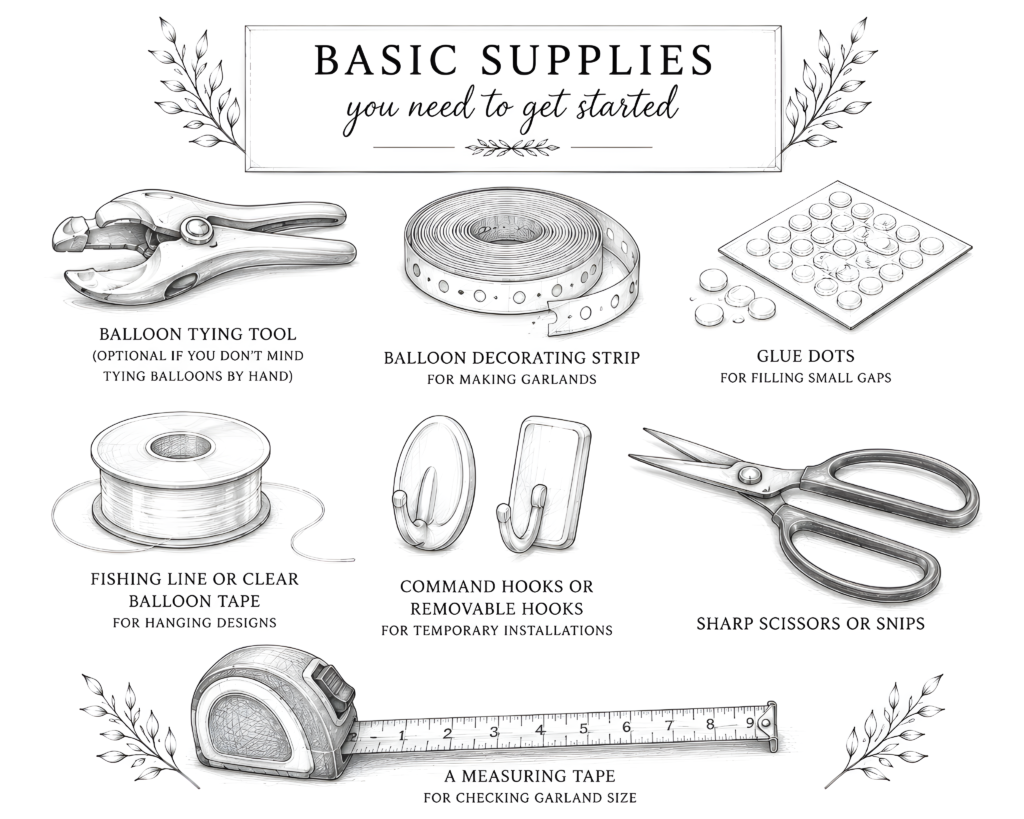
- Balloon tying tool (optional if you don’t mind tying balloons by hand)
- Balloon decorating strip for making garlands
- Glue dots for filling small gaps
- Fishing line or clear balloon tape for hanging designs
- Command hooks or removable hooks for temporary installations
- Sharp scissors or snips
- A measuring tape for checking garland sizes
Spend five minutes shopping online and you’ll find dozens of balloon gadgets that promise to make decorating easier. Most of them can wait.
There are certain tools you’ll use on every project. Buy those tools and skip the extras until later. A balloon decorating strip and a pack of glue dots will probably get used far more often than a gadget that only solves one specific problem.
Ask Yourself
Before adding another tool to your order, ask yourself:
– Will this make my work faster?
– Will I use it on most of my projects?
– Is there a simpler way to do the same thing?
If the answer is no, it’s probably something you can buy later.
Decision #5: Do I Need Backdrops, Stands and Frames?
Are you like me searching on Pinterest and Instagram for beautiful balloon walls and wedding arches? If you’ve spent any time looking at balloon businesses on Instagram and Pinterest, you’ve seen those incredible shimmer walls, arch stands, circle backdrops and giant display frames.
They’re gorgeous. They’re also expensive. It’s easy to think you need all of them before you can book your first client.
You don’t.
Many balloon decorators start by attaching garlands directly to a wall, around a doorway or over a dessert table. With a few removable hooks and some fishing line, you can create beautiful displays without investing in large equipment.
As you book more events, you’ll start noticing what your clients actually want. Maybe they keep asking for circle backdrops. They’re interested in shimmer walls. They love freestanding balloon arches. Let your bookings tell you what to buy. Instead of panicking that you don’t have the balloons or the arches, buy them as needed.
Renting is another option that’s worth considering. If you only need a specialty backdrop once or twice, renting can cost far less. You won’t need to spend full price, find a place to store it or transport it yourself.
Ever wonder how those balloon arches stay standing?
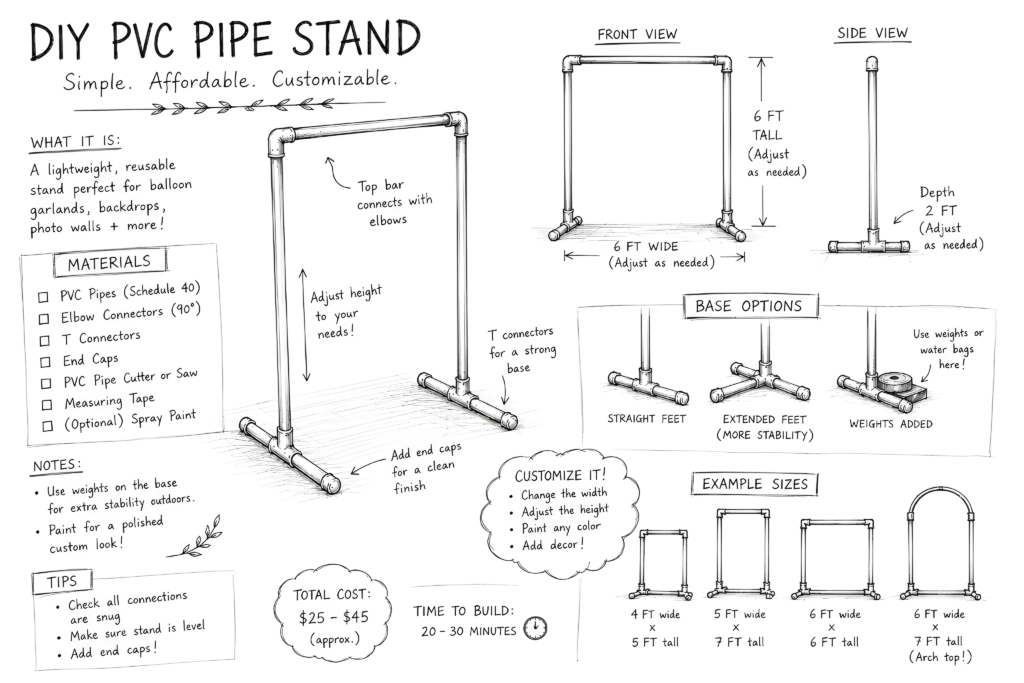
If you’re crafty, you also have more options than you might think. Many decorators build their own backdrop stands using PVC pipe or wood.
They can use hidden clamps to make sure everything stays in place. This is a great money saver when first starting out. A simple DIY stand can cost much less than a commercial frame and works well while you’re building your business.
Just make sure it’s sturdy enough for the job. Saving money isn’t worth risking a backdrop falling over during an event. That’s one reason experienced decorators can create the same design over and over. They’re reusing the frame, not rebuilding it from scratch every time.
Before buying or crafting a backdrop or frame, think about this:
**Where am I going to store it?**
Some backdrop stands break down into small pieces. Others don’t. The same goes for shimmer walls and large display frames. If you create it yourself, think about how it’ll break down for travel and storage.
It’s exciting to picture your future business. It’s a little less exciting when a six-foot metal stand or wood backdrop is leaning against your living room wall.
Ask Yourself
Before buying a backdrop or frame, ask yourself:
– Have clients actually requested this?
– Will I use it often enough to justify the cost?
– Could I rent one until I know it’s worth owning?
– Can I purchase the supplies and DIY it?
Your first goal isn’t to own every backdrop. Your first goal is to book clients.
Let’s talk about where you’re going to keep backdrops but also balloons and equipment.
Decision #6: Where Am I Going to Store All of This?
Here’s something people don’t tell you about starting a balloon business. Balloons don’t take up much space. Bags of balloons do. You’d be surprised.
“They’re just balloons”
Then a few orders arrive, and suddenly you’re trying to figure out where to put dozens of bags in every color and size. If you’re working from home, choose one place to keep everything organized from the beginning. Clear storage bins, shelves or labeled containers can save you a lot of frustration later.
You don’t need a picture-perfect craft room. You just need to know where things are. I’m one of those chaotic creators, so I need the reminder to organize from the beginning. Don’t wait until you are swimming in balloons to get a handle on it.
You’ll also want to think about your workspace. Balloon garlands can get surprisingly long, so you’ll need enough room to lay them out or build them in sections. If your workspace is small, that’s okay. Many decorators build part of the garland, move it aside and keep going until it’s finished.
Ever Wonder Why Decorators Organize Balloons by Color?
It’s not just because it looks nice.
When you’re building a balloon garland, you don’t want to dig through five bags looking for one color. A simple organization system saves time, especially when you’re getting ready for an event.
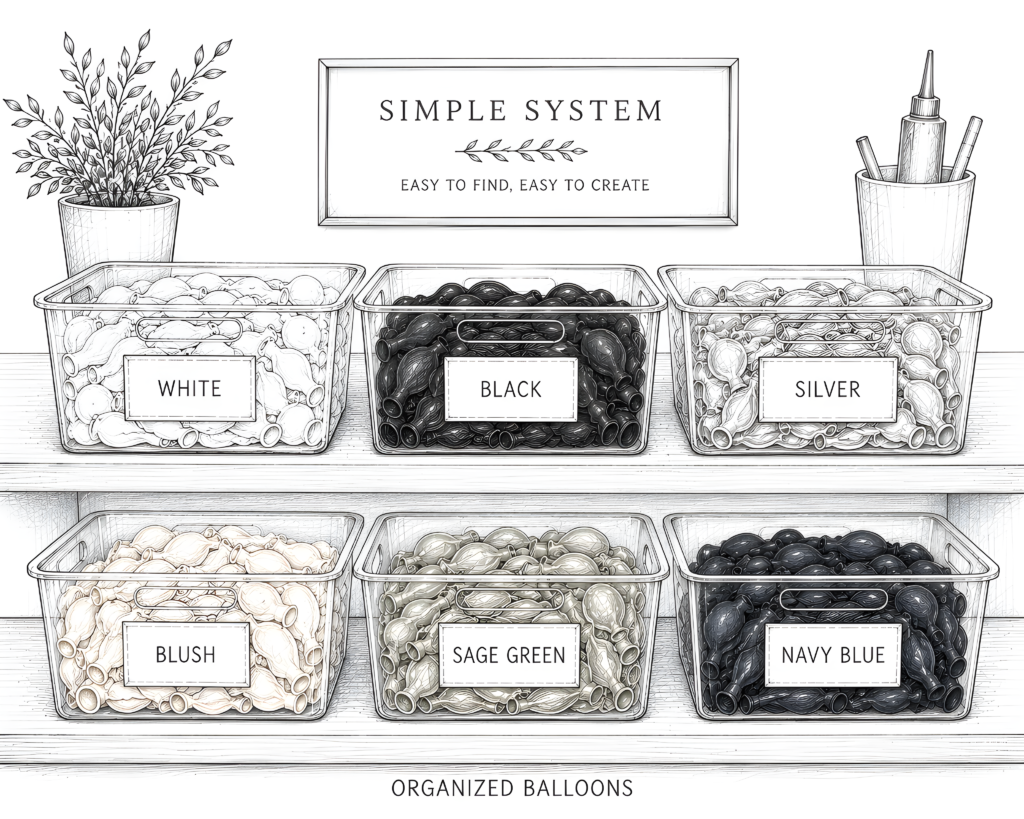
Don’t organize your supplies for Instagram. Organize them so you can find what you need in thirty seconds.
A shelf full of matching containers looks beautiful, but handwritten labels on clear bins work just as well when you’re getting started.
It’s a great way to save money in the beginning, too. The dollar store has simple containers for a reasonable price.
Ask Yourself
Before buying more supplies, ask yourself:
– Do I have a place to store these?
– Will I be able to find them quickly?
– Am I staying organized as my inventory grows?
You don’t need a fancy studio to run a balloon business.You just need a system that works for you.
Decision #7: When Should I Upgrade My Equipment?
It’s exciting to imagine the day your business is booked every weekend. It’s also easy to buy equipment for that version of your business before you actually need it. Try not to. Every piece of equipment should solve a problem you’re already having.
When you’re booking enough events that your starter balloon pump is slowing you down. Your clients keep asking for a circle backdrop and renting one every weekend is getting expensive. The DIY frame needs an overhaul. Those are good reasons to upgrade.
Buying something because you hope you’ll need it someday usually isn’t. A lot of successful creative businesses grow one purchase at a time. One event pays for a better pump. The next few events pay for a backdrop. Later, you add another stand or invest in more balloon colors.
Before long, you’ve built a business that has everything it needs. Not because you bought it all at once. Because you added the right things at the right time.
If a client books a shimmer wall package, use part of that payment to buy the shimmer wall. The next booking becomes more profitable because you already own it. It’s easy to buy all the equipment and make all the backdrops because you want everything “just in case.” You can always buy it or create it when a potential client requests it. You’ll have time.
Ask Yourself
Before upgrading your equipment, ask yourself:
– What problem will this solve?
– Will it save me time or help me earn more money?
– Have I outgrown what I already own?
If you can’t answer those questions yet, it’s probably okay to wait. Every business grows at its own pace.There’s no prize for having the biggest equipment collection. There is a reward for building a business that’s profitable.
Sample Balloon Business Starter Budgets
One of the biggest questions new balloon decorators ask is, “How much does it cost to get started?” The honest answer is… It depends on how you want to start.
Some people begin by decorating for friends and family. Others jump straight into paid events. Neither approach is right or wrong. The important thing is buying what you need for the next step not everything you’ll eventually own.
Budget-Friendly Start
If you’re testing the waters, focus on the basics:
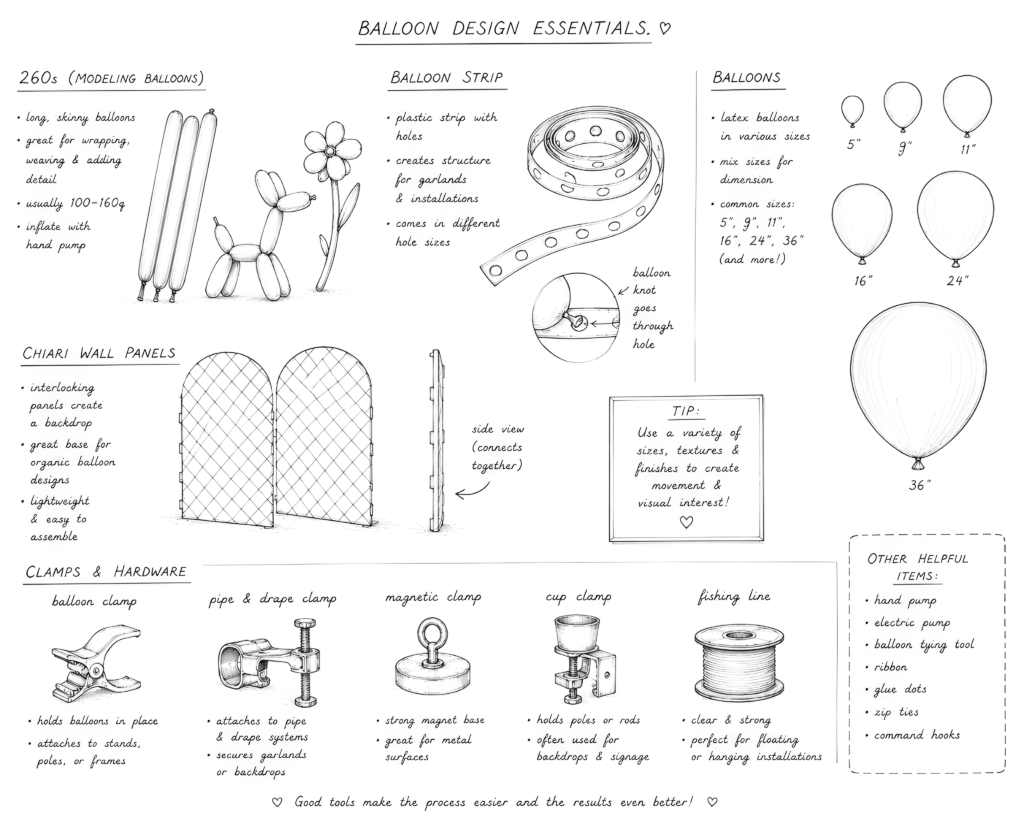
- Professional balloons
- An electric balloon pump
- Balloon decorating strip
- Glue dots
- Fishing line
- Scissors
- A tape measure
- A measuring box for consistency
This is enough to practice your skills, build a portfolio and start taking small jobs.
Ready for Your First Clients
Once you’re booking paid events, you might add:
- A small selection of popular balloon colors
- Command hooks and installation supplies
- Better storage bins
- A simple backdrop or DIY stand if clients are requesting one
At this stage, every purchase should make your job easier or help you book more events.
Growing Your Business
As your calendar fills up, you can start investing in larger equipment like:
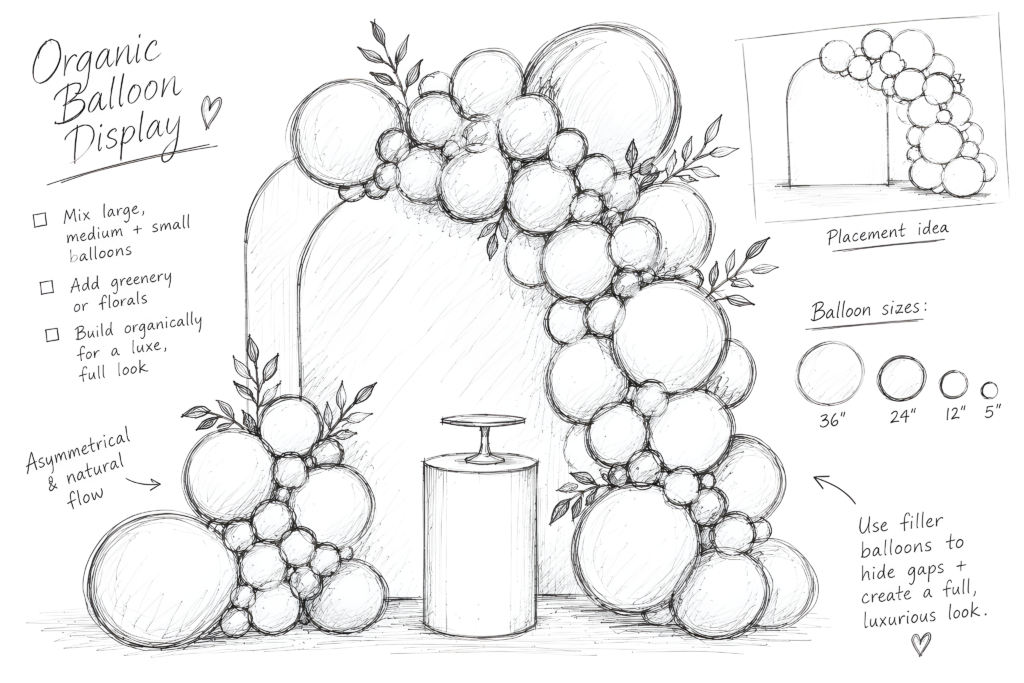
- Professional backdrop stands
- Shimmer walls
- Circle arches
- Specialty frames
- Larger inventories of balloons
- Commercial-grade inflators
The nice thing is you don’t have to buy all of this yourself on day one. Your business can help pay for it as you grow.
When you’re deciding what to buy next, ask yourself one simple question:
“Will this help me book more clients, do better work or save me time?”
If the answer is yes, it might be a smart investment. If not, leave it on your wish list for now. There’s nothing wrong with having a wish list. Just don’t mistake it for a shopping list.
Final Thoughts
Starting a balloon business doesn’t mean buying everything you see online. In fact, one of the smartest things you can do is start small and let your business grow from there.
Choose professional balloons from a trusted brand. Invest in an electric pump that will save you time. Pick up a few basic tools. Create with your creative DIY skills. Then wait to see what your clients actually need before buying more equipment.
Your first setup doesn’t have to look like someone else’s studio on Instagram. Every balloon business starts somewhere.
The decorators with shelves full of balloons and rooms full of backdrops didn’t buy everything overnight. They built their businesses one event at a time and their equipment collection grew with it.
You can do the same.
Build your skills. Book your clients. Let your business pay for its own growth whenever you can. The dream isn’t something you have to wait for.
You’re building your dream business as you go.
Ready to learn the creative side? Next, read our guide to making your first balloon garland. It’s where I’ll walk you through the process.